Category: Uncategorized

  • About

    Education:
    2017: Smithsonian Artist research fellow. Washington DC.
    2005-2007: MA Fine Art, National Arts Academy, Oslo Norway
    2001-2005: BA Fine Art, National Arts Academy, Oslo, Norway
    1998-2000: Diploma in art teaching – Evelyn Hone College of Applied Arts and
    Commerce, Lusaka, Zambia
    Work positions:
    The Lusaka Contemporary Art Centre Founder and Artistic Director
    2022-2023. Curatorial Assistant and technical consultant for the Inaugural exhibition of
    The Lusaka Contemporary Art Centre
    2020-2022: Expert. Grants program for the Nordic Culture Point.
    2002-2022: Private and Production Assistant to Jan Groth.
    2007 – : Art Studio Practice at Victor Mutelekesha Studio.

  • About

    Education:
    2017: Smithsonian Artist research fellow. Washington DC.
    2005-2007: MA Fine Art, National Arts Academy, Oslo Norway
    2001-2005: BA Fine Art, National Arts Academy, Oslo, Norway
    1998-2000: Diploma in art teaching – Evelyn Hone College of Applied Arts and
    Commerce, Lusaka, Zambia
    Work positions:
    The Lusaka Contemporary Art Centre Founder and Artistic Director
    2022-2023. Curatorial Assistant and technical consultant for the Inaugural exhibition of
    The Lusaka Contemporary Art Centre
    2020-2022: Expert. Grants program for the Nordic Culture Point.
    2002-2022: Private and Production Assistant to Jan Groth.
    2007 – : Art Studio Practice at Victor Mutelekesha Studio.

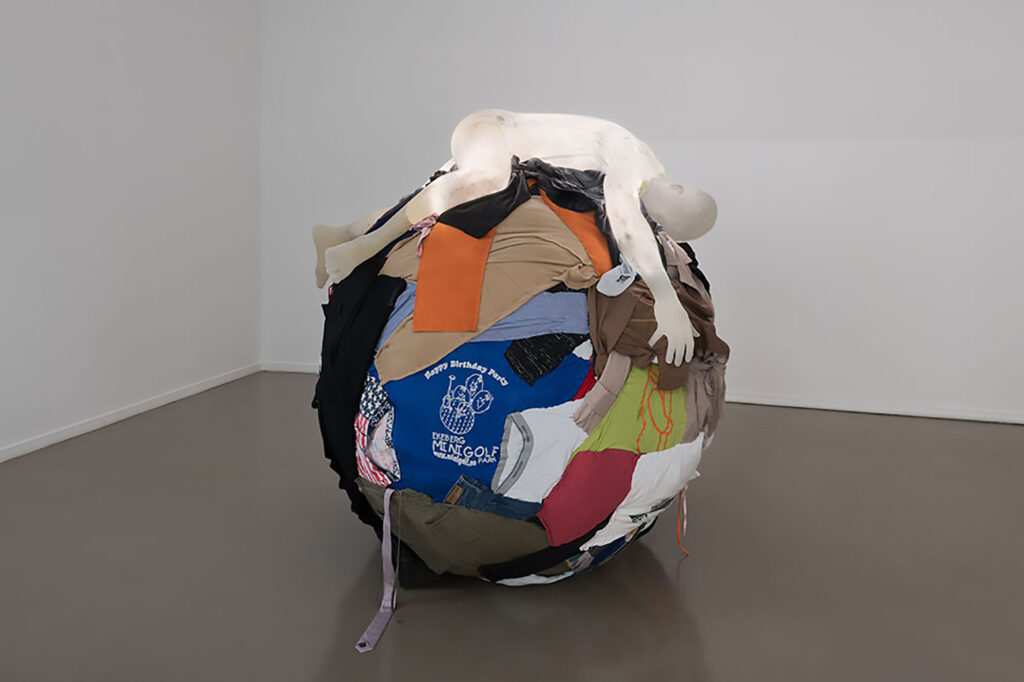
  • Phantom of self, 2017

    By: Victor Mutelekesha.
    Photographed by Istvan Virag
    Mixed Medium Sculpture.
    Dimensions:150cm Diameter.

    This project explores the self as a moving target, one with the potential of never being fully realized until the day we die. The self is in constant flux; what could better represent this state of flux than the clothes we choose to wear every day from the moment we are born until the very end? The larger component of the installation is made of clothing, which has become a defining factor of who we are and how we want the world to see us. Therefore, the self extends from the inner, truest self to the outwardly clothed self—an image that matters most to those who see us. Since throughout our years, we keep changing clothes like masks, our attached identity also remains an illusion; “The phantom of self,” so to speak.

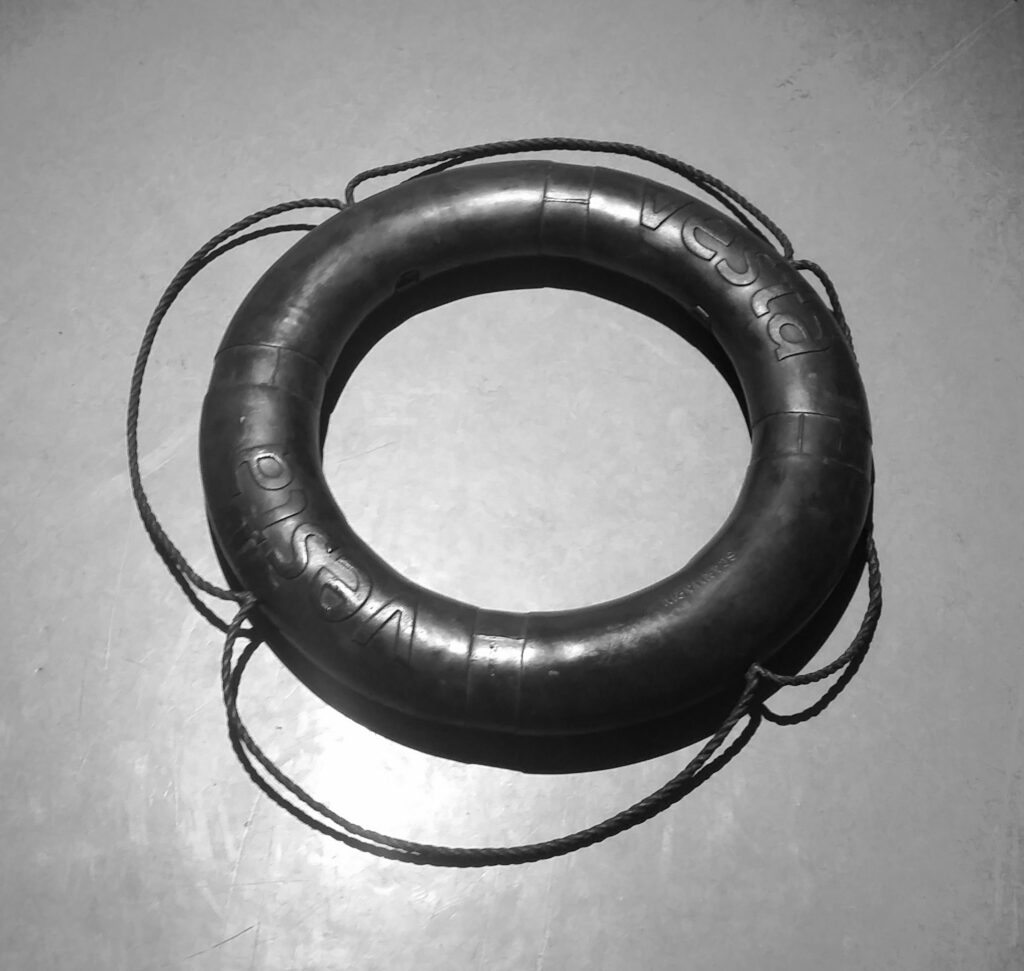
  • Lifebouy

    Lifebuoy, 2019

    Bronze Sculpture
     
    This monumentalized lifebuoy seeks to question rescue or aid extended at “Arms length”
    A conversation with a Veteran “aid worker” who seemed to have this very strong sense of self-importance but also belief that being in the middle of catastrophes rendering aid gives complete meaning to his whole existence made me question the very logic of aid; who really benefits from aid? Is it like those quick fixes by a drag addict whom keeps coming back for more becoming solely dependent? In the case of the Aid worker, on the continued misfortune of others so his life could still be meaningful?
    The Lifebuoy is thrown out on a leash, it is logical, and it’s the only way you will successfully bring somebody in. I suppose the same logic could b applied to aid, isn’t it given on a leash that creates a cycle of total dependence? Where one keeps coming for more but also on the part of the aid worker who keeps feeling a sense of worth…

  • Skins 2

    About Skins 1 and 2

     
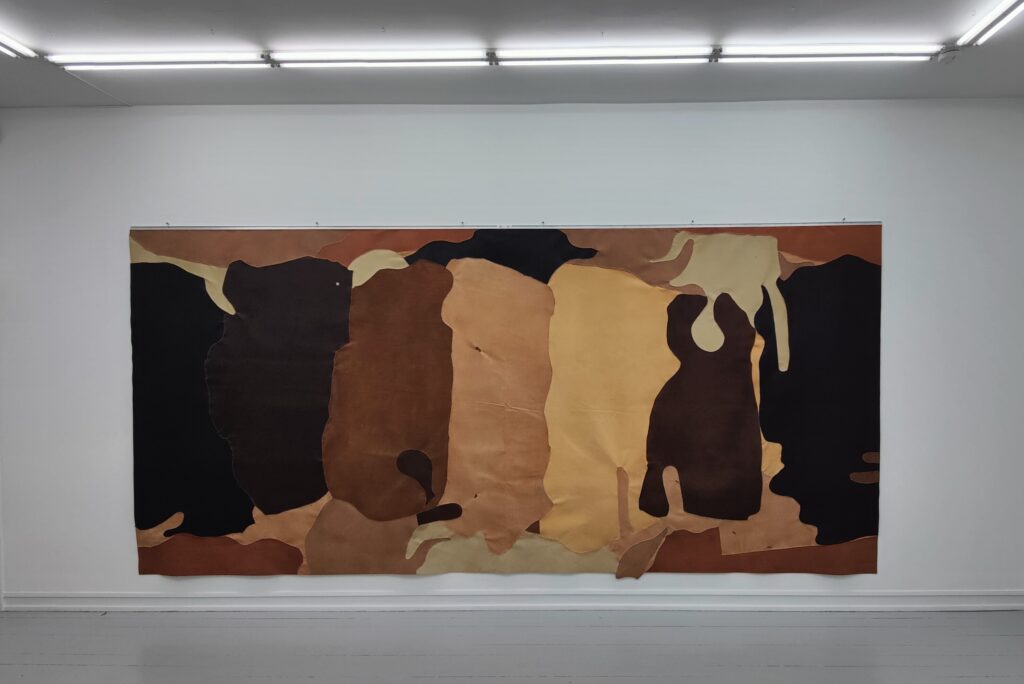
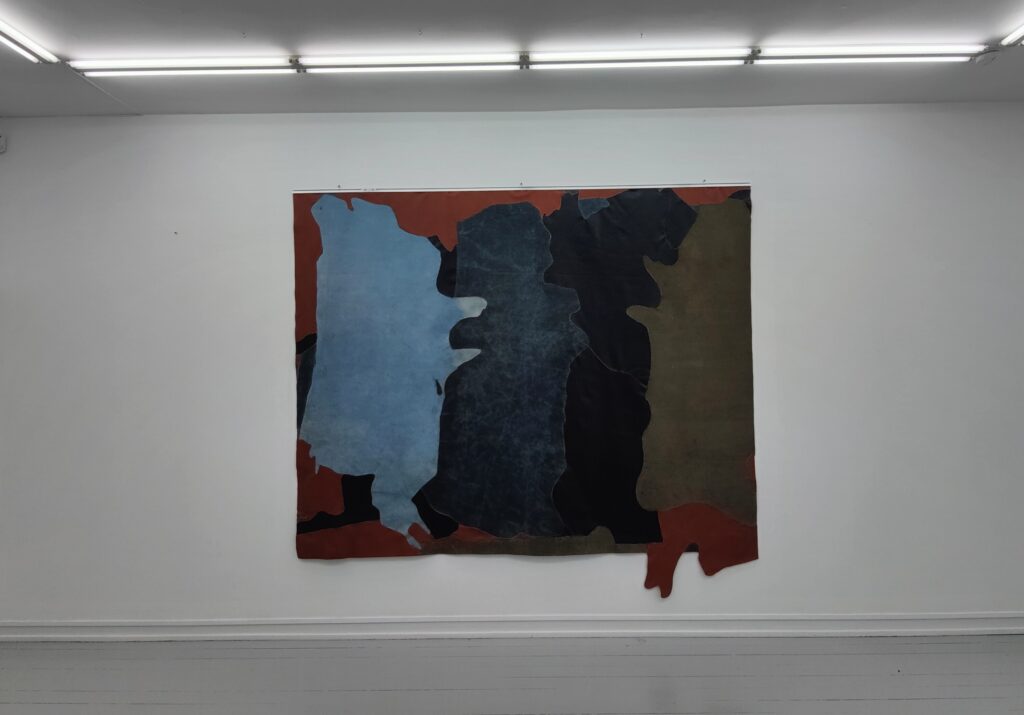
    The Skins project is one of my longest, if not the longest. It explores how visible physical characteristics can influence an individual and society regarding self-awareness. Even though skin color has been a controversial, contested, and often glorified aspect of one’s identity, it doesn’t define a person’s character. However, have we ever pondered over the seams and threads that hold these ‘skins’ together? These are the very sources of the hybrid nature of all.

  • Skins 1

    About Skins 1 and 2

    Skins 2 and 1 are montages of cow leather brought together by winding threads that successfully negotiate each piece’s flaws to realize a unified whole. It’s a union of purpose, a union of uniquely individual pieces, some of which redistribute bits and pieces to fill up holes in others to eventually realize a unified and complete whole, a metaphor that reflects on each of us. Skins 2 is made of ‘Zambian animals,’ while Skins 1 is made of ‘Norwegian animals.’
     
    Note: Skins 1 was recently acquired by the National Museum in Oslo

  • Hello world!

    Welcome to Astra Starter Templates. This is your first post. Edit or delete it, then start blogging!
  • Hello world!

    Welcome to WordPress. This is your first post. Edit or delete it, then start writing!